

TMS Therapy for Depression: Benefits, Side Effects, and Who Can Benefit
TMS therapy for depression is a non-invasive treatment that uses magnetic pulses to stimulate a mood-related area of the brain. It may help adults with major depression who haven’t improved enough with antidepressants. The most common side effect is scalp discomfort that usually fades within a week. Results vary, and a psychiatrist decides who is a good fit.
Key Facts
- What it is: a non-invasive treatment that uses magnetic pulses to stimulate a mood-related area of the brain
- Cleared for: major depressive disorder (MDD) in adults who haven’t improved with antidepressants, and for adolescents aged 15–21 as an adjunct (NeuroStar TMS)
- Medication or sedation: none; you stay awake
- Session length: 19 to 40 minutes depending on the protocol (about 20 minutes at our clinic)
- Typical course: about 36 sessions, around five days a week
- Most common side effect: scalp pain or discomfort, which usually eases within the first week
- Rare risk: seizure (under 0.1% of patients)
- Not suitable if: you have non-removable conductive metal in or near your head
- Insurance: coverage varies by plan; prior authorization is often required
What Is TMS Therapy for Depression?
TMS (transcranial magnetic stimulation) is a treatment that sends short magnetic pulses through a coil placed against your scalp. The pulses reach a brain area involved in mood regulation and prompt nerve cells there to fire. Over many sessions, this is thought to help that mood network work more normally. It is usually considered for people with major depressive disorder who haven’t improved enough with antidepressants.
What Are the Benefits of TMS Therapy for Depression?
TMS is non-invasive, needs no anesthesia, and acts on one area of the brain instead of the whole body. If you’re weighing depression treatment with TMS against medication, here is how they compare:
| Comparison | TMS Therapy | Antidepressant Medication |
| How treatment is delivered | Magnetic pulses are administered at a clinic, typically five days a week over several weeks. | Medication is taken by mouth at home, usually once or more daily, depending on the prescription. |
| Anesthesia or sedation | No anesthesia or sedation is needed. Patients remain awake during treatment. | Not required. |
| How it works | Uses targeted magnetic pulses to stimulate specific areas of the brain involved in mood regulation. | Works through chemical processes in the brain and body to help regulate mood. |
| Common side effects | May include scalp discomfort or a mild headache. | Varies by medication and may include nausea, drowsiness, weight changes, or stomach upset. |
| Treatment commitment | At our clinic, sessions typically last about 20 minutes, with a treatment course often involving around 36 sessions. | Requires regular daily use, along with periodic appointments to monitor progress and side effects. |
Note: Treatment schedules, duration, and side effects vary from person to person. A qualified healthcare provider can help determine which option may be appropriate based on an individual's needs and medical history.
Some more detail on the benefits:
- No anesthesia. TMS does not require anesthesia. You can drive yourself home afterward and carry on with your day.
- Studied in real-world practice. A large registry followed 5,010 adults with major depressive disorder at 103 US practices. Response rates ranged from 58% to 83% and remission rates from 28% to 62%, depending on whether patients or clinicians rated the results.
- Fits a normal schedule. Sessions last between 19 and 40 minutes, depending on the protocol. neurostar
What Are the Side Effects of TMS Therapy?
The most common side effect of TMS therapy is scalp pain or discomfort at the treatment site, which typically fades within the first week. Headache and neck pain can also occur. A seizure is a rare risk, at about 1 in 1,000 patients (under 0.1%).
| Side effect | What to know |
| Scalp pain or discomfort | The most common effect; usually fades within the first week |
| Headache or neck pain | Can occur early in treatment and usually passes |
| Clicking sounds | The coil is loud, so you’ll wear hearing protection |
| Seizure | Rare, under 0.1% of patients |
| Medication interactions | Some drugs matter; tell your psychiatrist everything you take |
A few more points:
- Fewer than 5% of patients in clinical studies stopped treatment because of side effects.
- Trials found no adverse effects on memory or concentration.
- Earplugs are used during treatment, and there is no evidence of lasting hearing effects when they are worn.
- Bupropion can cause ringing in the ears with TMS, and certain other medications can raise seizure risk.
- Tell your team if anything bothers you, since they can often adjust the settings.
Who Can Benefit From TMS Therapy?
TMS may be a good fit if you have major depressive disorder, you’ve tried antidepressants without enough relief (or couldn’t tolerate them), and you want a treatment without anesthesia or surgery. NeuroStar is cleared for adults with MDD, including MDD with comorbid anxiety symptoms, and as an adjunct for adolescents aged 15 to 21.
If anxiety is part of your picture, you can read more about TMS Therapy for Anxiety. TMS is cleared for anxiety symptoms that occur with depression, not for anxiety disorders on their own.
Who should not have TMS? NeuroStar shouldn’t be used if you have non-removable conductive metal in or near your head. People with certain seizure risks need a careful medical review first. A psychiatrist makes the final decision. Read more about who may be a candidate.
What Results Can I Expect?
TMS helps many people, but not everyone. The registry study was open label, so it had no comparison group. The device manufacturer also supported it. The results are encouraging, but they don’t mean most people will recover.
In a one-year follow-up study, 62.5% of patients who had responded or reached remission (75 of 120) still met response criteria throughout the year. Some people need a booster course later.
What Does a TMS Session Look Like?
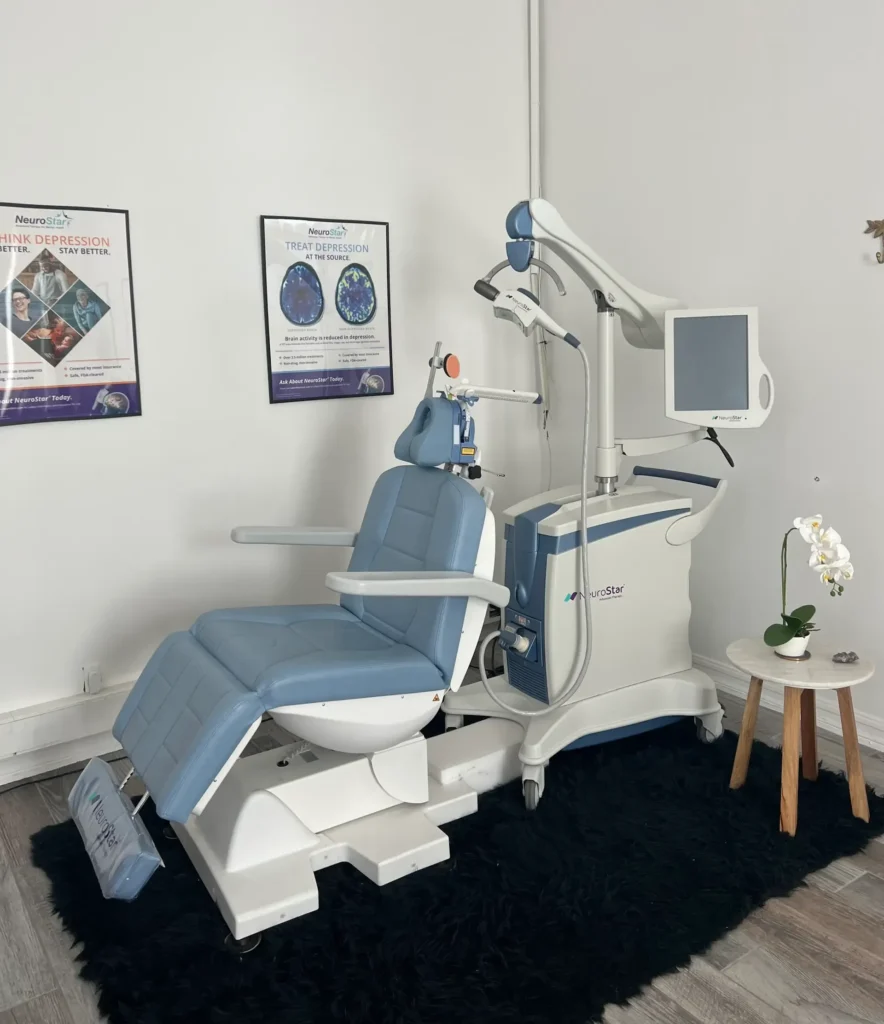
- You get comfortable in a reclining chair, and you stay awake.
- You put on hearing protection.
- The coil is positioned against your scalp.
- You feel a light tapping for about 20 minutes while the pulses are delivered.
- You go home. Most people drive themselves and carry on with their day.
Can TMS Help With Addiction?
Research into TMS treatment for addiction is ongoing, and results so far are mixed. NeuroStar is not FDA-cleared for addiction. TMS is most relevant when depression is part of the picture during recovery, and a psychiatrist can help you decide.
Does Insurance Cover TMS Therapy?
Many plans cover TMS for depression when their criteria are met, usually including previous medication trials and prior authorization. Coverage varies, so check your benefits first. Our insurance coverage and costs page has more detail, and our team can help verify your benefits.
Where Can I Find TMS Treatment in Los Angeles?
If you’re searching for TMS treatment Los Angeles, look for a psychiatrist-led clinic that explains eligibility honestly, verifies your insurance and gives straight answers about risks. California TMS Clinics offers NeuroStar TMS in Santa Monica and welcomes patients from Santa Monica, Los Angeles and Beverly Hills.
- Office 1: 127 Broadway, Suite 200, Santa Monica, CA 90401
- Office 2: 3301 Ocean Park Blvd, Suite 107, Santa Monica, CA 90405
- Hours: Monday to Friday, 8:00 am to 7:00 pm
- Telehealth: offered
- Phone: 310.857.4946
Frequently Asked Questions
Q1.Is TMS therapy effective for depression?
For many people, yes. Real-world studies show that a majority of patients respond or improve, but results vary and some people don’t respond.
Q2.What are the side effects of TMS therapy?
The most common are scalp pain or discomfort and headache, which usually ease within the first week. A seizure is a rare risk, at under 0.1% of patients.
Q3.Does TMS cause memory loss?
Clinical trials found no adverse effects on memory or concentration. Tell your psychiatrist about any concerns.
Q3.Who should not get TMS therapy?
People with non-removable conductive metal in or near the head, and others a psychiatrist judges to be unsafe candidates, such as people with certain seizure risks.
Q4.How long does a TMS session take?
Sessions last between 19 and 40 minutes depending on the protocol. At our clinic, a session takes about 20 minutes.
Q5.Is TMS covered by insurance?
Many plans cover it when criteria are met. Coverage varies, so verify your benefits before you start.
Q6.Can I keep taking my antidepressant during TMS?
Many people do, but your psychiatrist will review your medications first, because a few can interact with TMS.