
What Are the Most Common Side Effects of TMS Therapy? A Complete Guide
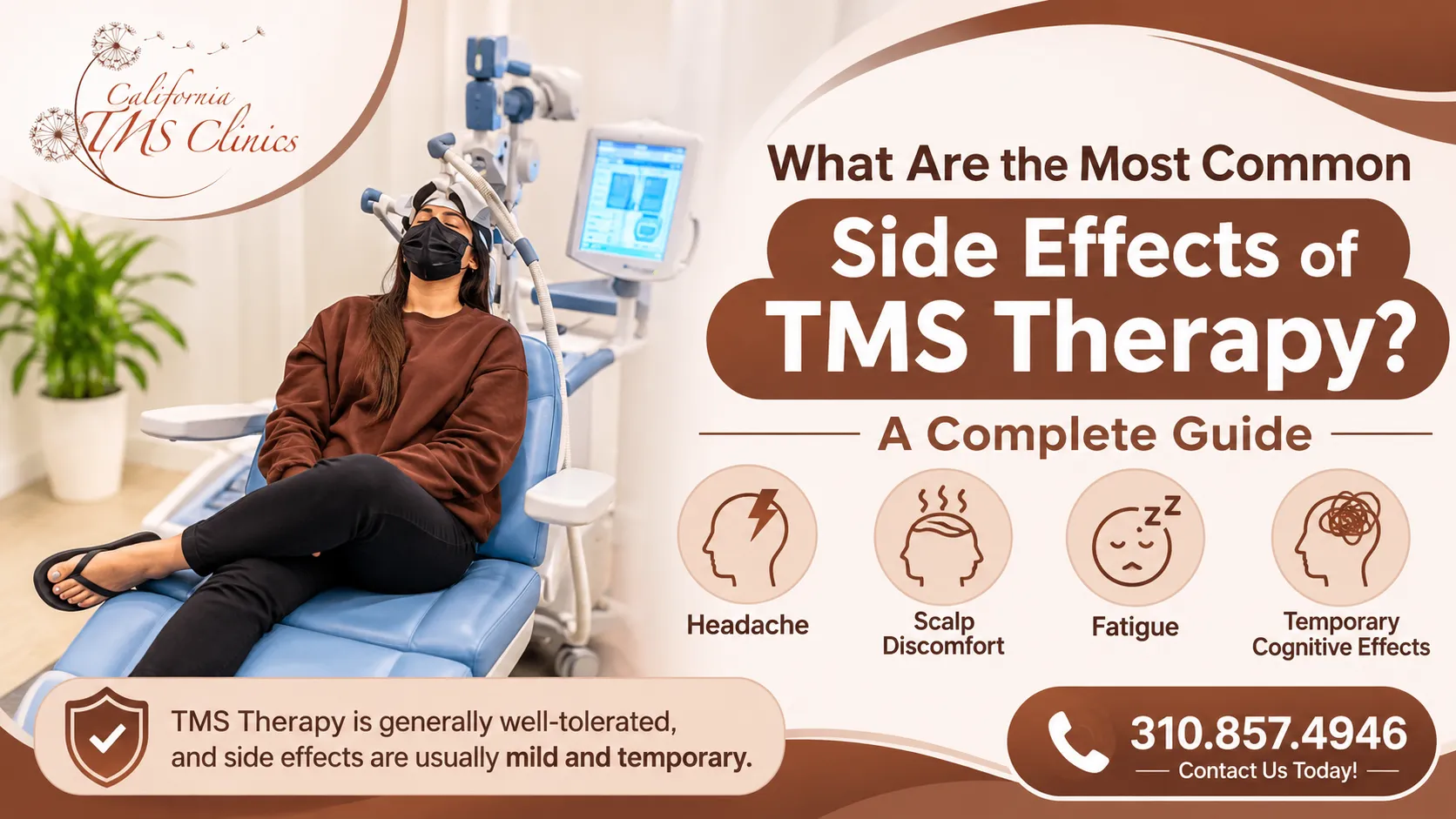
The side effects of TMS are usually mild and short-lived. The most common are scalp discomfort at the treatment site and headache, and both tend to ease within the first week or two of treatment. Serious side effects are infrequent and include seizures.
If you're weighing TMS after medication hasn't worked, it's natural to wonder what the experience is really like. Will it hurt? Will you feel strange afterward? Will you need time off? This guide answers those questions plainly, using information from the FDA-cleared NeuroStar safety labeling and trusted medical sources, so you can walk into a consultation informed.
Key Takeaways
- Most common side effects: scalp discomfort at the treatment site and headache.
- Usually mild: most effects are mild to moderate and improve soon after a session.
- They fade with time: many people feel more comfortable after the first one to two weeks.
- Serious effects are rare: seizures occur in fewer than 0.1% of patients, according to NeuroStar safety information.
- No general anesthesia is needed: many people return to their usual activities after a session. Ask your clinician whether driving and other activities are appropriate for you.
- Your team can help: technicians can adjust settings for comfort, and you can tell them anytime something feels wrong.
What Are the Common Side Effects of TMS?
The most common side effects of TMS are scalp pain and minor headaches. According to the Mayo Clinic, these symptoms are usually mild to moderate, and they will go away shortly after a session and become less evident over time.
Here are the effects people report most:
- Scalp discomfort or pain. You may feel a tapping or knocking sensation where the coil rests, and some people find it uncomfortable at first.
- Headache. Often a mild, tension-type headache that appears during or after a session.
- Tingling or twitching. Some people notice tingling or small twitches in the face or scalp muscles while the pulses are on.
- Lightheadedness. A few people feel briefly lightheaded during or after treatment.
NeuroStar's own safety information names pain or discomfort at or near the treatment site as the most common side effect. It says these effects are temporary, occur during the treatment course, and don't occur for most patients after the first week.
Does TMS Therapy Hurt?
For most people, TMS isn't painful, but it can be uncomfortable at first. The usual description is a firm tapping on the scalp while the pulses are active, with a clicking sound from the machine.
Mayo Clinic notes that you may feel scalp discomfort during the tapping, but not during the pauses between pulse trains. You stay awake and alert the whole time, and you can speak up at any moment.
Here is what helps:
- Tell your technician right away if the tapping is too strong. Settings can often be adjusted.
- Use the earplugs your clinic offers to soften the clicking sound.
- Give it a few sessions. Many people tolerate treatment better after the first week or two.
Does TMS Cause Headaches?
Headaches are one of the two most common TMS side effects, but they're usually mild and short. In NeuroStar clinical studies, headaches were reported by about half of participants and at nearly similar rates in the active-treatment and sham-treatment groups. This suggests that not every headache reported during treatment can necessarily be attributed to the magnetic stimulation itself.
Your care team can suggest ways to manage them. Many clinics note that over-the-counter pain relievers can help, and you should check with your doctor first.
How Long Do TMS Side Effects Last?
For many patients, TMS side effects last for a short time after TMS treatment and become less noticeable over the first several sessions. However, the duration depends on the type of symptom, treatment settings, and individual response.
| Side effect | Typical pattern |
| Scalp discomfort | Often improves during the first week of treatment |
| Headache | May resolve shortly after a session and become less frequent over time |
| Facial twitching | Usually occurs during stimulation and settles afterward |
| Lightheadedness | Often brief, but persistent symptoms need medical review |
These are normal patterns, not guarantees. And symptoms can last for different periods of time. If symptoms continue between appointments, worsen, or begin to interfere with your routine, inform your treatment team. Do not stop treatment or change prescribed medication without discussing it with your clinician.
Are There Serious Side Effects of TMS?
Serious side effects are rare, but you should know what they are. According to NeuroStar's safety information, seizure is a rare risk, occurring in fewer than 0.1% of patients.
Other rare effects that medical sources mention include:
- Mania. Emotional highs have been reported, particularly in people with bipolar disorder.
- Hearing problems. The clicking sound can harm hearing if your ears aren't protected, which is why earplugs matter.
- Fainting. Rare, and usually related to anxiety or anticipation.
Who Needs Extra Screening Before TMS?
Some people need a closer look before starting, and a physician should always review your history first. Your team screens for:
- Metal implants or devices near the head, such as aneurysm clips, cochlear implants, or stimulators.
- A history of seizures or epilepsy.
- Bipolar disorder, because of the rare risk of mania.
- Certain medications that can lower the seizure threshold.
Tell your treatment team about dental work, braces, implants, and any metal or electronic devices in or near your head. The clinical team should assess compatibility with the specific TMS system rather than assuming every item is safe.
How Do TMS Side Effects Compare With Antidepressant Side Effects?
TMS side effects differ from those associated with antidepressant medication. TMS does not expose the body to medication in the same way, so it is not associated with many medication-related systemic effects, such as nausea, dry mouth, drowsiness, or sexual side effects. However, TMS has its own risks, and side effects vary by treatment and individual.
That difference is a big reason people look into TMS therapy for depression after medication hasn't worked or hasn't been tolerated. TMS isn't free of side effects, and it isn't right for everyone, but the trade-offs are different.
Does TMS Affect Memory or Thinking?
Available studies of NeuroStar have not found evidence of adverse changes in cognitive function during the studied treatment period. This does not guarantee the same experience for every patient. Many people resume normal activities after a session, but ask your clinician about driving and any activity-specific precautions.
If you have anxiety symptoms coupled with depression, find out more about TMS Therapy for Anxiety and talk to your physician about whether this treatment may be right for you.
Talk to California TMS Clinics About Your Treatment Options
Understanding the side effects of TMS can help you make a more informed and the right decision about treatment. Scalp discomfort and headaches are common, but many individuals are able to deal with them, and the symptoms may improve over time. It is important to have a clinical evaluation to determine whether TMS is appropriate for you and to analyze how potential dangers might be minimized.
If you are considering TMS for depression or have questions about treatment safety, California TMS Clinics can help you understand the next steps.
Frequently Asked Questions
What are the side effects of TMS?
The main side effects are scalp discomfort and headache. Some people also have facial twitching, tingling, or lightheadedness. Most are mild and fade with time.
Is TMS therapy safe?
NeuroStar is FDA-cleared and generally well tolerated. Seizures are a rare risk, under 0.1% per patient. A physician screens you before treatment.
Can I drive after a TMS session?
Yes. TMS needs no sedation, so most people drive themselves home and return to their day.
Do TMS side effects get worse over time?
Usually the opposite. Side effects tend to decrease as sessions continue. Tell your clinician if yours doesn't.
Should I stop TMS if I get a headache?
Not without talking to your care team first. Mild headaches are typical, and your clinician can change your plan or give you ideas about how to cope with them.
When should I call my doctor?
Call right away if you have a seizure, severe or worsening pain, hearing changes, or unusual emotional highs. In an emergency, call 911.
This article is for information only and isn't medical advice. Results and side effects vary from person to person. NeuroStar is available by prescription only. See neurostar.com for full safety and prescribing information.